I have a problem with potential.
I am a photographer. I play music. I build cars. I am a classic “Jack of All Trades,” a man with a dozen skill sets and just as many half-finished projects. By most definitions, this is a good thing. But lately, it has started to feel like a weight.
There is a voice in our culture—the “Hustle Culture” whisper—that says if you are good at something, it is a waste if you aren’t making money from it. If you can take a professional-grade photo, why aren’t you booking weddings? If you can swap an engine, why aren’t you flipping cars on the side?
If I’m not using the things I’ve learned and monetizing my skills, am I just wasting time?
The Specialist Envy
There is a specific kind of struggle that comes with being good at a lot of things. I often find myself envying the experts—the people who pick one or two lanes and go incredibly deep. They have a level of mastery that feels out of reach when your attention is split a dozen different ways.
I feel like I never go deep enough. I’m a “Jack of all trades” who knows enough to be dangerous in five different fields, but I’m rarely the smartest guy in the room in any of them.
And yet, I’m not willing to lay anything down. I like knowing how stuff works. I like the autonomy of being able to do things myself. But that curiosity comes at a cost: the constant nagging feeling that because I haven’t mastered one thing, I’m just skimming the surface of everything.
The Stalled Silverado
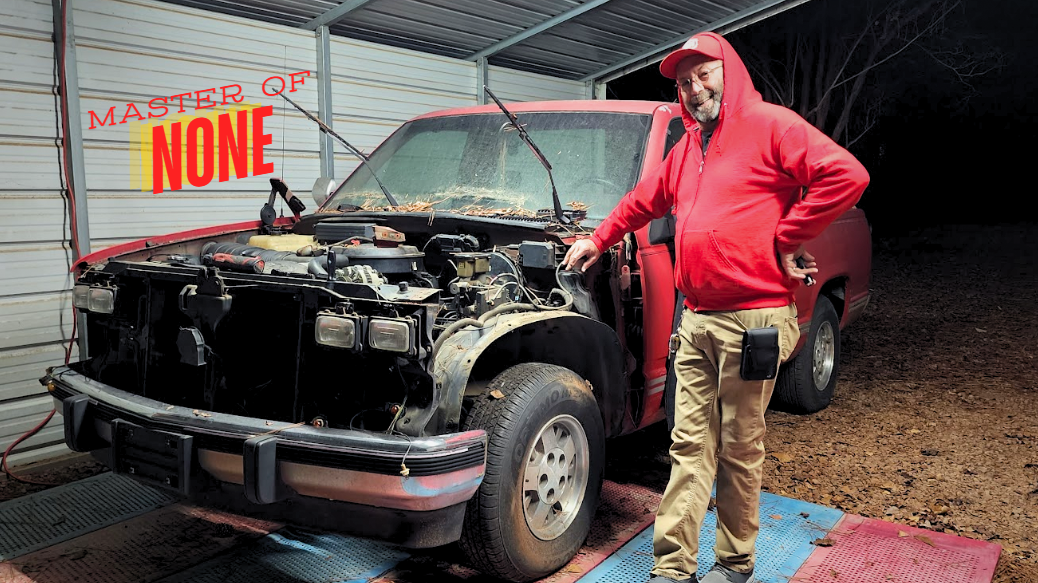
In my driveway sits an ‘88 Silverado. Back in November of 2023, my dad and I spent a day taking it apart to prep for an engine swap. It was a good day. We were just starting the process, and while I was going to be doing most of the heavy lifting solo, having him there to kick things off made it feel like more than just another mechanical task.
He passed away unexpectedly in June of 2024.
Since that day, I haven’t been able to touch the truck. What was supposed to be a fun project has become a physical reminder of a timeline that was cut short. Every time I walk past it, I don’t see a win; I see a list of things I haven’t done. I see “wasted potential” sitting on four flat tires.
It’s not just the Silverado, either. I’ve found myself loathing even basic maintenance on my other cars—even the 1986 Trans Am that usually serves as my creative outlet. The spark is just gone.
The Expectation of Joy
This is where the fatigue really settles in. It isn’t from the work itself. It’s from the expectation of the work. When a hobby starts to feel like a “potential side hustle” or a project that must be finished to prove its value, it loses its ability to be a refuge.
It becomes another column in the spreadsheet of my life that I have to manage.
The ‘Go-Giver’ Guilt
I struggle with the idea of creating just for me. In the framework of The Go-Giver, we are taught that our value is determined by how much we give to others. So, when I spend four hours editing a photo that no one will ever see, or playing a guitar riff that stays in my office, it feels like I’m hoarding value. It feels like a waste.
But I’m starting to realize that the “Architect” I want to be—the one who builds frameworks for others to thrive—needs a place to recharge.
If every single thing I do has to be for someone else’s potential or the organization’s profit, then I am not an architect; I am just a resource being mined.
Reframing the ‘Waste’
What if being “Master of None” is actually the point?
Maybe the reason I have so many hobbies isn’t because I’m supposed to have six different businesses. Maybe it’s because I need six different ways to see the world so I can be a better human for the people who actually matter: my wife, my kids, and the people I lead.
The Silverado doesn’t need to be finished by Tuesday. The photos don’t need a price tag. And my joy doesn’t have to be “productive” to be valuable.